TikTok: How It Works, Why It’s Addictive, and What We Can Actually Do About It
TikTok by the Numbers: Who Uses It and How Much
Have you ever wondered how much of your time slips away between one video and the next, while you're waiting for the bus, on your lunch break, or simply trying to unwind on the couch at the end of the day?
To understand the impact of a digital platform on our lives, we first need to measure its reach. The numbers tell us that we're not dealing with a passing trend, but with a cultural infrastructure that has become deeply embedded in our daily routines.
TikTok has reached approximately 1.9 billion monthly active users worldwide, making it the fifth most popular social media platform globally — right behind Facebook, YouTube, WhatsApp, and Instagram. In the United States alone, TikTok counts over 136 million monthly active users, while the European Union reported 169 million average monthly active users between January and June 2025.
What's most striking, however, isn't just the number of people logging on — it's the time they choose to spend inside this ecosystem. Globally, the average person now spends around 2 hours and 21 minutes per day on social media. Within this landscape, TikTok dominates unchallenged when it comes to holding attention: users spend an average of 95 minutes per day on the app — surpassing established giants like YouTube (48 minutes), Instagram (35 minutes), and Facebook (30 minutes). Gen Z users under 26 push that figure even higher, averaging 152 minutes daily.
I should point out that, despite being commonly categorized as a social media platform, TikTok is better understood as a pure entertainment app given its structure and usage logic. Shares, likes, and followers have a relatively limited impact on the platform's core mechanics compared to the algorithm's role in content delivery.
This is happening at a time when a growing "social fatigue" is being registered globally — a cognitive exhaustion leading users to reduce their average time spent on traditional social platforms. TikTok, however, seems immune to this weariness.
TikTok's audience is far from being exclusively young. Analyzing the demographics, we find that 55% of weekly active users in the US are between 18 and 34, and the average age of a US TikTok user is now over 30. The gender split is fairly balanced globally, with a slight male majority (54.5% male, 45.5% female according to Statista). It's a highly active and diverse audience that uses the platform to cultivate specific interests: from technology to beauty, sports to cinema. In short, TikTok has long stopped being "the dancing app" and has transformed into a parallel search engine — a discovery space where trends are set, opinions are formed, and consumer choices are shaped. Nearly 40% of Gen Z users now prefer searching TikTok over Google for certain queries.
How the Algorithm Works: The Invisible Engine
What makes this app so irresistible, to the point of making us completely lose track of space and time every time we open its famous main page?
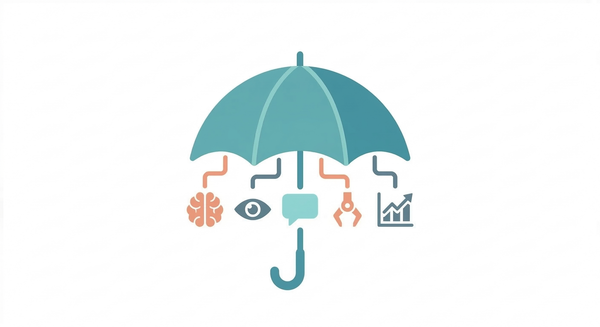
Artificial intelligence is the invisible infrastructure of social media, serving hyper-personalized feeds that maximize time spent on the platform.
The secret behind TikTok's success lies in its technological core: a predictive recommendation algorithm powered by advanced forms of artificial intelligence. Through machine learning techniques — such as Natural Language Processing (NLP) and clustering algorithms — the system constantly analyzes user behavior, interpreting feelings and interests in real time. Every fraction of a second you pause on a video, every "like," every comment, and even the time it takes you to scroll past content you're not interested in, becomes valuable data. The app doesn't ask you to search for what you want to watch; it figures it out before you do, delivering a continuous, inexhaustible stream of short, highly accessible videos.
This design is not accidental. It's engineered to interact directly with our brain's reward system — the mesolimbic pathway. When we receive content we enjoy, our brain releases dopamine, a neurotransmitter linked to pleasure and motivation.
TikTok exploits this mechanism by offering intermittent and unpredictable rewards, exactly like a slot machine: you never know if the next video (the next "pull of the lever") will be the one that makes you laugh or moves you emotionally, so you keep scrolling.
Neuroimaging studies have shown that viewing personalized, algorithm-recommended TikTok videos specifically activates brain regions associated with the reward system and suppresses task-irrelevant internal thoughts, completely absorbing the individual's attention.
The European Commission, in a preliminary investigation, pointed directly at this design, defining it as capable of creating addiction. Features such as infinite scrolling, autoplay, and constant push notifications deactivate deliberate thinking, shifting the brain into an "autopilot" mode. It's a formidable reinforcement mechanism: interactions with video features significantly influence user dependency, increasing perceived enjoyment and, simultaneously, the feeling of withdrawal when use is interrupted. The paradox is that, despite this sophisticated architecture influencing our daily lives, a significant portion of the population remains unaware of how recommendation algorithms even work.
Risks for Children
If we adults, equipped with critical tools and experience, struggle to tear our eyes from the screen, how can we expect a teenager — whose brain is still in full development — to manage it?
The prefrontal cortex reaches full maturity around the age of twenty-five, making minors particularly vulnerable to reward mechanisms.
To understand the risks young people face, we need to look at biology. The prefrontal cortex — the brain region responsible for long-term planning, complex decision-making, and above all, impulse control — continues developing well past the age of majority, reaching full maturity around twenty-five. This physiological immaturity makes children and adolescents extraordinarily sensitive to social gratification and the dopamine spikes generated by social media. Under this pressure, prolonged use of short, fragmented videos has led to the coining of clinical and colloquial terms like "popcorn brain" (a brain so overstimulated it struggles to adapt to the slower pace of offline life) or "brain rot," indicating a dramatic decline in working memory and concentration capacity.
Researchers have identified that TikTok addiction in minors operates through "flow theory." The quality and immersive nature of the system lead young users to experience extreme enjoyment, intense screen-focused concentration, and a profound distortion of time perception — minutes and hours vanish without them realizing it. But lost time and attention are just the tip of the iceberg. The hyper-personalized algorithm can trap young people in content bubbles (filter bubbles) that amplify pre-existing issues. Scientific literature has documented a strong correlation between intensive social media use and the onset of eating disorders, body image dissatisfaction, and the emulation of dangerous challenges (the notorious "challenges").
On top of this come concrete threats to personal safety. Direct messaging features and live streaming (TikTok LIVE) have unfortunately been exploited by bad actors. Teachers, researchers, and prosecutors have raised alarms about the spread of child sexual abuse material (CSAM) and about grooming and sextortion practices. A recent investigation led by multiple Attorneys General in the United States accused the platform of enabling the exploitation of minors, who were pushed to perform inappropriate acts during live streams in exchange for virtual gifts convertible into money. However, without full awareness of the mechanisms at play, technical supervision alone is often not enough.
Risks for Adults
We often think that smartphone addiction is a problem confined to school desks, but how many times have you found yourself scrolling through videos late at night, stealing precious hours from your rest just to have a little time for yourself?
Prolonged use leads to what experts call "revenge bedtime procrastination" — stealing time from sleep to compensate for the lack of personal space.
The idea that adults are immune to algorithmic manipulation mechanisms is a dangerous illusion. Even though our prefrontal cortex is fully formed, we are subjected daily to stress, fatigue, and responsibilities. In these vulnerable conditions, the amygdala — our brain's emotional and survival center — takes the wheel. When we're stressed, we feel a "primal urge to scroll" to temporarily escape reality and numb our worries. This often leads us to "revenge bedtime procrastination": after a day spent meeting everyone else's demands, we end up sacrificing sleep just to reclaim a fragment of time for ourselves, glued to TikTok until two in the morning. The long-term consequences are severe sleep deprivation, which translates into irritability and an increased risk of cardiovascular problems.
The impact on adult mental health has been extensively documented. A study conducted on university students demonstrated that even a brief session of just twenty minutes on TikTok is sufficient to generate a measurable increase in FOMO (fear of missing out), loneliness, and boredom, while simultaneously reducing the sense of connection with others. In parallel, a Polish study on young adults revealed a very strong positive correlation between problematic TikTok use, the tendency to procrastinate on work or academic duties, and the onset of depressive symptoms. Meta-analyses confirm this worrying trend, suggesting that for every additional hour spent on social media, the risk of developing depression increases linearly.
At the cognitive level, the scientific model I-PACE (Interaction of Person-Affect-Cognition-Execution) explains how excessive internet use impairs attention, emotional regulation, and the inhibitory control that is fundamental to making rational decisions.
It's no coincidence that a global increase in ADHD (Attention Deficit Hyperactivity Disorder) diagnoses is being recorded, even among the adult population, whose symptoms are exacerbated precisely by excessive exposure to rapid and continuous digital stimuli.
The adult who uses TikTok to relieve stress ends up in a trap: the momentary relief quickly transforms into chronic cognitive fatigue, triggering a vicious cycle of increasing disconnection from real life and meaningful relationships.
What We Can Actually Do
Knowing how these algorithmic dynamics work is the first step, but what are the concrete actions you can put into practice starting today to reclaim control of your time and protect your family?
The solution isn't to demonize technology, but to develop more conscious and balanced interactions that protect our psychological well-being.
Outright bans and technophobia rarely prove to be winning strategies in the long run. Digital technology is a formidable tool for expression, culture, and business; the point is learning to manage it, reducing the friction it generates on our cognitive and relational capacities. The approach must be practical and tailored to the audience.
For Parents
Tackling children's digital education requires presence and clear rules — not just abstract prohibitions. Leading pediatric organizations, including the American Academy of Pediatrics (AAP) and the World Health Organization (WHO), have issued precise guidelines based on the latest scientific evidence: it's essential to avoid unsupervised internet access and to delay the purchase of a first personal smartphone until at least age 13. Even if the law allows it, signing up for social media should be postponed as long as possible to protect emotional development.
In daily practice, it's vital to establish technology-free zones: no screens at the table during meals and, most importantly, devices strictly out of the bedroom before going to sleep, to protect the sleep cycle. However, studies show that technically imposed time limits (such as screen lock after 60 minutes) have negligible effectiveness if they are not accompanied by dialogue. The key is "active parental mediation": talking to your children about what they see online, helping them develop a critical sense toward content, and encouraging them to cultivate creative hobbies, sports, and in-person social interactions.
For Everyone
If you want to take back the helm of your attention, there are some behavioral and technological modifications you can implement right away. Psychology and digital well-being experts suggest radical but effective actions: the first is to uninstall from your smartphone applications designed as "slot machines" (including TikTok). If you need them for work or leisure, force yourself to access them only through a desktop computer; adding this small logistical barrier is enough to break the conditioned reflex that drives you to open the app at every moment of boredom.
Another powerful trick is to set your phone screen to black and white (grayscale): removing bright colors eliminates visual hyperstimulation and makes the interface far less rewarding for the brain, defusing the compulsive need to scroll. Additionally, disable all non-essential notifications; your phone should never vibrate or light up to tell you that someone posted a new video.
Finally, train yourself to tolerate boredom again. Apply the "Stop, Breathe, Be Present" technique (a conscious three-second pause before unlocking your phone) to deactivate the amygdala and let the prefrontal cortex regain control. When you're at home, leave your smartphone in a different room from where you work or rest: mere physical distance prevents the "brain drain" phenomenon — the mental energy consumed by resisting the temptation to check the screen. Rediscovering deep, uninterrupted analog activities — whether it's reading a book, playing an instrument, or simply thinking in silence — is the only true antidote for restoring our neural networks and returning to being masters, not products, of the digital world.
To close this long discussion about TikTok, I'll share my personal experience: the idea for this article came after watching the video listed in the sources section — "Brain Rot Emergency: These Internal Documents Prove They're Controlling You!" — which, despite its rather alarmist title, features the insights of two experts on short-form video and mental health. I tried putting the tips from the video into practice — the same ones I've shared in this article — and I can honestly say that the benefits of limiting social media consumption become noticeable within just a few days: less anxiety, less need to constantly check my phone, and better concentration. I admit that I still use platforms like TikTok and Instagram from time to time, but with a different awareness.
And I'd like to remind you of a fundamental concept when it comes to social media:
When something is free, you are the product.
For questions, thoughts, or to share your experience — feel free to reach out.
Until next time. Beyond the screen.
Sources / Bibliography
Section 1 — Usage Data:
- DataReportal — "Global Digital Report 2025" (Simon Kemp / Kepios) — https://datareportal.com
Section 2 — Algorithm & Neuroscience:
- De D., El Jamal M., Aydemir E., Khera A. — "Social Media Algorithms and Teen Addiction: Neurophysiological Impact and Ethical Considerations" (2025)
- European Commission — Preliminary investigation: TikTok's addictive design violates the Digital Services Act (2026)
Section 3 — Risks for Minors:
- Jain L. et al. — "Exploring Problematic TikTok Use and Mental Health Issues: A Systematic Review of Empirical Studies" (2025)
- Caponnetto P. et al. — "Does TikTok Addiction Exist? A Qualitative Study" (2025)
- US Attorneys General multi-state investigation into TikTok and minor exploitation
Section 4 — Risks for Adults:
- Study on university students: 20-minute TikTok session effects on FOMO, loneliness, boredom
- Polish study on young adults: TikTok use, procrastination, and depressive symptoms
- I-PACE model (Interaction of Person-Affect-Cognition-Execution)
- Meta-analyses on social media use and depression risk
Section 5 — Practical Guidance:
- American Academy of Pediatrics — "Media and Young Minds" (Pediatrics, 2016) + 2026 "5 C's" framework
- World Health Organization — "Guidelines on Physical Activity, Sedentary Behaviour and Sleep for Children under 5 Years of Age" (2019)
- Common Sense Media — "The Common Sense Census: Media Use by Tweens and Teens" (2024)
Personal Inspiration:
- "Brain Rot Emergency: These Internal Documents Prove They're Controlling You!" — The Diary Of A CEO (YouTube, 2025)
- Buffer — "31 TikTok Statistics to Know for 2026" — https://buffer.com/resources/tiktok-statistics/
- Backlinko — "TikTok Users" (updated January 2026) — https://backlinko.com/tiktok-users
- Proxidize — "TikTok Statistics 2025: Users, Trends & Analytics" — https://proxidize.com/research/tiktok-statistics/
- DemandSage — "How Many People Use TikTok 2026" — https://www.demandsage.com/tiktok-user-statistics/
- TikTok — DSA Transparency Report 2025 (169M EU monthly active users)
- Statista — TikTok global user demographics 2025